This is a source for analysis, interviews, and commentary on security in Latin America. Herein you will find rumors, the results of off the record interviews, and information you'll not find in international or United States news media.
Tuesday, February 16, 2010
Brazil: Still Against Honduras
His remarks underline Brazil's continued chagrin over the forced removal of Zelaya, and I'm interested to see how Brazil's stand against Honduran President Lobo will play out across the region. As the US moves to support the Central American country, Brazil may find itself standing alone in the region. So far, however, many countries have yet to show support.
Tuesday, November 24, 2009
Brazil takes a step closer to Iran
The most notable agreement signed detailed the loosening of visa restrictions. As those of you who have traveled from Brazil to the US know, Brazil maintains a reciprocal visa policy, which simply reciprocates for foreign nationals the procedure required for Brazilians to enter any given country.
So if Iran agrees to allow Brazilians to visit Iran and receive a three-month tourist visa upon entry, then the same would be true for Iranians visiting Brazil. I haven't seen the wording of that particular agreement, but I suspect it might be something similar to a three-month tourist visa stamp upon arrival.
Ahmadinejad also won an important position statement from Lula, who has now announced that Brazil supports Iran's right to peaceful nuclear energy. This is classic Lula, who likes to talk one way and act another. Given Brazil's desire to reform the UN Security Council, such positions are not tenable in an environment where Iran is considered a "non-aligned" country.
It's also worth mention that Brazil has had its own disagreements with the IAEA, so Lula's position in support of Iran is also one that supports Brazil's long history with the IAEA, one that promotes sovereignty and peaceful nuclear development. But then again, Brazil is not Iran, nor is it a "non-aligned" country.
When push comes to shove, I don't think Brazil will choose supporting Iran over its UN goals.
And on that note, Petrobras announced on 16 November that it's conducting an evaluation of its operations in Iran to determine if the energy company should pull completely out of Iran. The excuse? Discoveries have not been commercially viable...
Friday, August 28, 2009
Lula's UNASUR Summit
Brazilian President Luis Inacio “Lula” da Silva generated the most interesting news this week, ahead of the 28 August UNASUR summit, to be hosted by Argentina in the ski-resort town of Bariloche.
On 22 August, Lula signed a raft of agreements with Bolivian President Evo Morales in Bolivia’s Chapare region. An agreement worth US$332 million underpins the construction of a 306-kilometer highway from Villa de Tunari in the Chapare to the eastern Bolivian department of Beni.
Brazil has also agreed to import tariff-free textiles worth some US$21 million, which is the same amount of money Bolivia lost due to Washington’s decision not to renew the US-Andean Trade Promotion and Drug Eradication Act (ATPDEA) last year. The two leaders also discussed changes in the Brazil-Bolivia natural gas deal, as well as cooperation for bilateral efforts to combat the drug trade, but no solid agreements surfaced.
By many accounts, this meeting was a significant win for Morales, who has been under pressure to find alternative markets for Bolivia’s textiles. The highway construction will also please Chapare leaders, who are Morales’ closest political supporters. He will need them later this year for the run up to Bolivia’s 6 December 2009 presidential elections
For his part, Lula has assured support from Bolivia, despite Morales' anti-US stance, at the UNASUR summit, which promises to be contentious with both Venezuela and Colombia in attendance, and with Ecuador currently holding the president’s chair, which Colombia will likely view as an unfair arbiter.
While Lula has voiced some concern about Colombia’s agreement to allow the US military access to seven military bases in Colombia, he does not side with Chavez, nor can he take such a hardened position against Colombia. UNASUR is widely considered Brazil’s initiative and the strongest effort towards unifying South America under Brazil’s leadership. Lula cannot lean too far to the left in criticizing Colombia and the US at the risk of distancing himself from regional moderates and Washington.
The concern over US bases in Colombia does signal that the United States can still tilt the balance of soft-power in the region, but Lula’s deft diplomacy will likely win out. He did invite President Obama to attend the summit, and while Obama will likely not attend, Lula can at least maintain an open posture towards Washington, signaling that as the de facto regional leader, Brazil has nothing to fear from the US’ increased military presence in Colombia. He also did receive assurances from Obama’s National Security Advisor, Jim Jones, in early August that there would be a “good explanation” for the US’ presence in Colombia.
But Brazil would like a commitment: Obama will not use the Colombian bases to launch missions into other countries. This request is also one made on behalf of all of Colombia’s neighbors - a conciliatory geopolitical stroke ahead of the summit to make sure that Ecuador, Colombia, and Venezuela can at least agree on something.
Thursday, July 16, 2009
Sino-Brazilian Naval relations
The Chief of Staff of the Japanese Maritime Self Defense Force recently met with Chinese Defense Minister Liang Guianglie in Ningbo, Zhejiang province, China to review China's East Fleet. Many analysts agree that Naval control over the waters of East Asia will again become a contest (as it was during WWII) as China's Navy, known as the PLAN, continues its rapid development.
Japan, especially is worried, as is the United States.
But what I find more interesting is Brazil's role in China's naval development.
Below, my research assistant Kelsey Price, has prepared a backgrounder on Sino-Brazilian naval relations, including Brazil's offer to train the Chinese on the use of aircraft carriers - something the PLAN has yet to deploy.
--
As China attempts to solidify its place as an emerging world power, its leaders have placed more emphasis on building a stronger navy. At the forefront of this naval initiative is the construction of, and training for, China’s first aircraft carrier. Russia has sold China its former carrier Varyag (renamed the Shi Lang), and China has been slowly updating the craft since its docking at a Chinese shipyard in 2002. Analysts conclude that China’s navy, or PLAN, may use the ship for training and as a base for the construction of two of its own carriers.
Brazil is looking for international significance as well, so when PLAN turned to Brazil’s aircraft carrier-trained crew to train China’s navy, the Latin American power agreed to invite Chinese naval personnel aboard the Sao Paolo, Brazil’s only aircraft carrier. While the two BRIC nations—part of a group with Russia and India—both benefit from the military favor, China had very few choices. Brazil is one of only four nations to maintain an aircraft carrier capable of launching and recovering conventional aircraft, and the only one willing or able to train PLAN personnel. The United States has little interest in training the navy of a country it sees as a potential threat; EU law prohibits France from helping; and China’s relationship with Russia is hampered by an intellectual property dispute over Chinese fighter aircraft.
China clearly benefits from the naval training, but Brazil’s reward for helping China is less material than political. Brazil strengthens its reputation as a global force, especially when it assists a country as powerful as China. It also establishes stronger relations between the two countries, which formerly concentrated on economic ties and shared inclusion in the emerging BRIC nations.
Brazil and China’s other BRIC partners—India specifically—have expressed concern over PLAN’s technological advancement. India has declared China to be its “biggest threat.” China’s Major General Qian Lihua, director of the ministry’s Foreign Affairs office, assured, “Even if one day we have an aircraft carrier, unlike another country, we will not use it to pursue global deployment or global reach.” China’s President Hu Jintao also claimed that he did not seek regional hegemony or an arms race; rather, China would use its navy to pursue international cooperation in peacekeeping and anti-piracy enforcement.
The United States suspects other motives. A US Congressional Report for the People in May suggested that China may plan to use its improved navy to create conflict with Taiwan, and perhaps to prevent US intervention in the dispute. China may also use its threatening aircraft carrier to assert itself in the region, especially regarding its claims in territorial and freedom of navigation disputes. Its strengthened place as a world power may also convince other countries to align its policies with China, and displace US influence in the region. These concerns have prompted the US navy to pursue increased monitoring of China’s actions and to send more personnel to the Pacific.
Bates Gill, director of the Stockholm International Peace Research Institute, considers the very display of China’s navy a non-verbal threat to other countries. PLAN celebrated its 60th anniversary by including 52 navy vessels and aircraft in maneuvers off the eastern port of Qingdao in April. "Showing what you have can always also act as a deterrent - that's how it's seen in the US," said Mr Gill. "When the US navy takes an aircraft carrier to Hong Kong, it also tells the Chinese, have a look, you don't want to confront this."
Brazil and China’s rise in international influence—and displacement of US influence—is expedited by a visibly strong navy, and the partnership forming between the two nations suggests the emergence of a strong BRIC allegiance without the sway of the United States.
Notes:
“Beijing’s aircraft carrier will convert Asian oceans into Chinese lakes.” 28 May, 2009. Rupee News delivered by Newstex.
Farley, Robert. “The New China-Brazil axis.” 27 May 2009. The Progressive Realist.
“Brazil/China consolidate energy, trade and finance partnership.” 19 May, 2009. South Atlantic news agency MercoPress.
Ansari, Moin. “BRIC-battered: The growing Brazil china axis and fraying Indo-Russia deals.” 27 May, 2009. Rupee News.
“China has aircraft carrier hopes.” 17 November 2008. BBC.
Hille, Katherin. “China’s show of sea power challenges US.” 24 April 2009. The Financial Times.
“China Naval Modernization: Implications for U.S. Navy Capabilities -- Background and Issues for Congress.” 29 May 2009. Open CRS, Congressional Report for the People.
See “China’s show of sea power challenges US,” Financial Times.
Thursday, July 09, 2009
Brazil, Russia, and Turkey - energy backgrounder
On 10 June, ISN published a piece I prepared on Brazil and Turkey. Entitled, "Petrobras Empowers Turkey", this commentary focused on Lula's recent trip to this promising country and the energy deals sealed between Petrobras and its Turkish counterpart, TPAO.
In the piece, I discussed briefly how Turkey and Russia compete for dominance in the EU energy markets - Russia by providing natural gas through its own pipelines, and Turkey by developing its own energy supply for sale and, more importantly, by allowing others to lay pipe across Turkey to access EU markets.
But this topic deserves more attention and explanation.
My research assistant, Kelsey Price, has prepared a Russian energy backgrounder that expands upon Russia's role as an energy supplier for the EU as well as Turkey's budding presence in regional energy markets.
---
Russia’s immense supply of natural gas gives Moscow a significant hold over its foreign consumers, especially the European Union, which received over a quarter of its gas supplies from Russian gas company Gazprom in 2004. Disputes over pricing with third party countries have, in the past, cut off large portions of Europe’s energy supply, and despite the EU’s pleas with the Russian state Duma to open its gas line monopoly, the Duma has reinforced Gazprom’s power by giving it “exclusive right to export of gas” in 2006.Recently, Russia expanded its influence, promising large-scale projects in southeastern Europe: the ambitious South Stream pipeline, for one, would help Europe diversify its energy supplies at least among the various Gazprom lines. Russia has also promised to build a power plant in Bulgaria, create a Central European gas hub, and finance various storage facilities, all to court skeptical countries into supporting the South Stream.
However, Russia’s strategy lies solely in its willingness to make generous concessions to European partners that outweigh the disadvantages of foregoing energy diversification. This strategy may have seemed feasible at one time, considering Russia’s success during formerly high gas prices. Now that gas prices have dropped and the global recession has taken its toll (Russia saw a 9.5% contraction in its economy during 1Q09) funding for these projects may disappear. Moscow’s European partners are happy with promises for now, but Gazprom’s controversial Russia-to Germany project Nord Stream has already needed to request an increase in its credit guarantee by about 1 billion euros. Once the gas giant has to begin cutting back on its projects, Russia may have to delay or retract some of its hefty promises.
Financial problems may also affect Russia’s energy supply; the Energy Ministry reported on June 18 that most new oil projects in Russia would not be profitable even with gas at $150 a barrel. Without government incentives for new fields, such as lower export tariffs and a laxer taxation system, Russian oil companies will produce 40 million tons less oil in 2013 than they did this past year, the ministry said. While the ministry is attempting to make oil companies more profitable, this drop in confidence in Russia’s energy supply may also drive European countries and other gas importers to work harder to diversify their suppliers.
Russia has also been known to restrict its gas supply as leverage in payment skirmishes. In January 2006, Russia decreased the amount of gas sent to the Ukrainian pipeline because of a drawn-out pricing dispute; this pipeline brought gas not only to Ukraine, but to Western Europe as well, and countries like Germany, Italy and the Czech Republic saw drastic reductions in their energy supply. Russia and Ukraine signed a treaty four days later, but the dispute demonstrated Russia’s strong influence in energy and its powerful “negotiating” tactics.
In October 2007, Russia threatened to cut off power to Ukraine once again because of unpaid debt. While Gazprom assured Europe that its consumers would not experience any decrease in energy supply, the European Commission still called for a swift resolution in the dispute, still wary of Russia’s hold over the region. While Ukraine’s deputy prime minister repaid the debt, Gazprom claimed that the overall issue was not over. “Gazprom is a reliable supplier of energy resources, but we cannot and should not deliver gas without payment,” said Gazprom spokesman Sergei Kupriyanov after the March 2008 repayment.
At the end of 2008, Ukraine owed Gazprom over $1 billion, and on January 7 Russian Prime Minister Putin ordered a halt on all gas sent through Ukrainian pipelines on accusations that Kiev had been siphoning off energy and disrupting the flow to Europe. At least eighteen countries reported significantly less pressure in pipelines, especially Bulgaria, Moldova and Slovakia. After Europe suffered gas shortages during a subzero winter, on January 18 Russia restored gas supplies and began demanding that Ukraine pay European prices, not its previously discounted post-Soviet prices.
The gas crisis caused even more concern than before for European consumers, who lost confidence in Russia and Ukraine as reliable gas suppliers and business partners.
Russia’s influence over Europe as a major supplier also faces some challenges from an empowered Turkey. Various companies other than Gazprom have offered Turkey the opportunity to become a European energy hub, mostly through the U.S.-backed Nabucco line. The 3,300-km pipeline from Azerbaijan would help European countries diversify their energy options, and some say it is more cost-efficient than Gazprom’s proposed South Stream project. The Nabucco project would violate Turkey’s prior support of the central Iraqi government’s exclusive right to export oil from the country, as Turkey has been a key ally in Iraqi centralization. However, Turkey would become the energy hub for Europe if Nabucco succeeds over South Stream, giving it some needed influence in the continent—Turkey is still bidding for a spot in the EU, despite opposition from France’s Sarkozy and Germany’s Merkel.
Russia has blocked Turkey’s influence in the past, however, striking deals with Kazakhstan and Turkmenistan in 2007 that drew exports away from the Nabucco line. Also, Russia and Gazprom have remained confident in gas sales to Europe despite decreased exports to the region and a group of oil fields deemed unprofitable. Gazprom’s market share in Europe and Turkey dropped from 30 percent last summer to just 16 percent in the first quarter, in part because Russian contracts held prices that were set at the record-high levels of six to nine months ago. Medvedev reassured reporters at a news conference, “this can be seen as a shift in demand from an earlier period. That’s why we, at Gazprom, don’t see any reason for panic and pessimism.”
Sources/Notes:
Bogle, Sally. “EU Countries Glimpse Consequences of Future Dependence on Russian Gas-as Pricing Dispute with Ukraine Cuts Import Flows.” Global Insight, 3 January, 2006.
Buck, Tobias and Buckley, Neil. “Duma votes for Russian gas export monopoly.” Financial Times, 16 June 2006.
For environmental and security reasons: http://tinyurl.com/mmoptk
Koutsarov, Ivan. “Economic crisis threatens Russian projects in Southeastern Europe.” Global Insight, 27 May 2009.
Malkova, Irina. “Most oil projects may not be profitable.” The Moscow Times, 18 June 2009.
“Russia cuts off gas supply to Ukraine.” The New York Times, 1 January 2006.
“Gazprom cuts Ukrainian gas supply.” BBC News, 3 March 2008.
“Factbox- 18 countries affected by Russia-Ukraine gas row.” Reuters, 7 January 2009.
Solovyov, Dmitry and Ferris-Rotman, Amie. “Russia and Ukraine aim to sign gas deal on Monday.” Reuters, 18 January 2009.
Ciszuk, Samuel. “OMV, MOL, Crescent Attempt to Bring Iraqi Kurdistan Gas Through Nabucco to Europe.” Global Insight, 18 May 2009.
Ü.S. throws weight behind EU’s Nabucco pipeline.” Reuters, 22 February 2008.
Schleifer, Yigal. “Questions cloud Turkish-EU energy cooperation.” EurasiaNet, through ISN. 13 June 2007.
Medetsky, Anatoly. “Gazprom sees no reason for ‘panic.’” The Moscow Times, 25 June 2009.
Wednesday, July 01, 2009
Brazil: A fiscal paradise?
The OECD is pressuring Brazil to sign on to its Global Forum on Transparency and Information Exchange regime, branded as a "Partnership Against Corruption."
For most of his presidency, Lula has spoken out against so-called "fiscal paradise" countries around the world, where financial controls and laws governing money movement are both relaxed enough to invite would-be money laundering organizations to take residence.
Brazil has done it's fair share of anti-money laundering efforts, but it appears that in the eyes of the OECD, Brazil is still just another money laundering hub in Latin America. I would imagine that Brazil has opted not to join the OECD's club simply because under Lula's leadership, the country still has some affinity for the non-aligned movement, which would preclude any membership in such "aligned" organizations.
And perhaps more to the point, Brazil doesn't like to join a group that will tell it what to do, unless, of course, Brazil is at the head of the table, such as UNASUR.
Wednesday, June 17, 2009
Brazil: the low hanging fruit

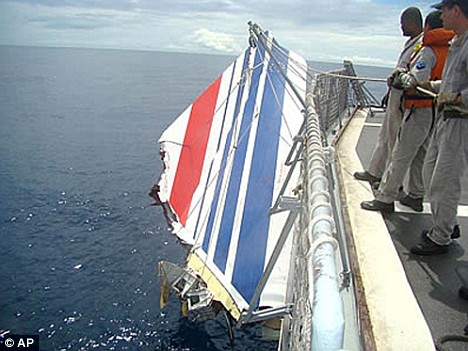
Southern Pulse has reported yesterday that the French authorities are investigating the possibility that two terrorists boarded Air France flight 477 in Rio with the premeditated intention of exploding the aircraft.
A week or so ago, the Brazilian intelligence agency leaked (not sure if it was intentional or not) that some analysts were considering the theory that the explosion was a terrorist attack.
News out of the UK exonerates the two men who the French thought were terrorists, but I want to consider for a moment the possibility that terrorists boarded a flight in Rio to explode an Air France jet.
I've lived in Brazil for a long time, most of that time spent in Rio. I can say from first hand experience that it would not be a challenge for anyone who wanted to board a plane in Rio with an explosive device.
The security is all but non-existent. But that's not the root of it. The bottom line is that the Brazilian government, and most Brazilians, think that terrorism is some one else's problem.
This is why, for example, that certain employees of the USG have complained in the past that the Brazilians were dragging their heels when it came to the 3+1 group (Brazil, Argentina, Paraguay - plus - the United States), which worked on issues such as money laundering and terrorist financing in the tri-border area.
When I speak with Brazilian Federal Police, politicians, and academics, and others, we always talk about organized crime, the drug trade, black markets, Brazil's borders (it shares a border with ten other countries), and areas of the country that are most vulnerable, namely the Amazon.
But when the topic of terrorism comes up, the usual response is the FARC - and rightly so. The FARC is the most proximate terrorist group that many Brazilian officials consider a threat.
The idea that Hezbollah or some other terrorist group may be forming cells in Brazilian cities, with the intention of hitting a soft target in Brazil, is not something that I think the Brazilians spend a lot of time talking about and thinking about.
Then again, the United States did not embrace a national dialogue about terrorism until September 11.
Terrorism is not a happy topic. When we dig into the realities that a terrorist presence may produce, the conclusions are frightful, and demanding. Homeland security in any county is a high-ticket item. And the Brazilian government simply does not have the resources.
The explosion of AF477 likely was not a terrorist act. The strongest evidence of that theory is that no one has stepped forward to claim responsibility - correct me if I'm wrong.
If it was a terrorist act, however, it would put Brazil on the map of terrorist targets, changing the reality of all who live and work in Brazil, and likely changing the posture of the Brazilian government vis-a-vis working with the USG to clamp down on terrorist activity in South America.
I am thankful the flight was most likely a freak accident, but I'm worried for Brazil.
For any terrorist group looking for a place to hit a soft target, Brazil is a low hanging fruit - one that becomes ever more juicy as Lula raises Brazil's profile on the global stage.
Monday, June 01, 2009
Terrorist Communications Cell in Brazil?
When I speak to US federal agents - and other security analysts - about Brazil's past, especially regarding their interest in working with Brazil in the arena of terrorist financing and related security matters, the usual response is simple.
Brazil doesn't play ball because they don't think terrorism is a Brazilian problem.
There is one reason why this type of pre-programmed response has begun to change on the Brazilian side.
Brazil is becoming more important on the global stage. As the so-called "sleeping giant" begins to make waves beyond South America, Brasilia will be expected to assist Washington and other countries with relevant security-related efforts, and this stretches well beyond UNASUR and Ameripol into the realm of terrorist financing, organized criminal activity out of Eastern Europe, and, most recently, terrorist communication networks.
Recently the Brazilian Federal Police, working with the FBI, captured an alleged "important leader" of the Al Qaeda organization. According to some reports, this man had a "high degree" of operational responsibility in the sector of communications.
This man, now named Khaled Hussein Ali, comes from the Bekaa Valley region of Lebanon and had worked in the IT sector in Sao Paulo. He has lived in Brazil for some 20 years.
His location in Sao Paulo is significant because heretofore, the focus of terrorist activity in Brazil, was in the south, bundled around Ciudad del Este, the focal point of the region's most famous tri-border area.
Khaled was arrested due to his association with the Jihad Media Battalion, which is known as a "very radical" Islamic group. He was arrested for racism on the 26th of April, then released some time later by a Brazilian federal judge who saw no reason to keep the guy under lock and key. The Brazilian government has denied that Khaled is part of Al Qaeda (predictably), but it has revoked Khaled's Lebanese passport.
As far as I know, there have been wire taps on Khaled's phones, and the Brazilian media continues to follow this case pretty closely. As I learn more, I'll post it here.
Monday, May 04, 2009
Brazil's Iron Lady has cancer
I have said many times now that Brazil has a bright future. And on 25 April it just got a little brighter for Lula's team.With Obama in office, the realities of Brazil's increasing power and presence in South America, and the very real possibility that Brazil will not ask for financial help from the IMF or anyone else to help weather the global economic slow-down, President Lula will leave his hand picked successor everything she needs to carry Brazil into its new role as a regional leader and global energy provider.
Dilma Rousseff, currently serving as Lula's chief of staff, has a decent chance of winning, but now, it looks like her chances just got better because she has cancer.
On 22 April, she found out that a swollen lymph node was malignant. On 24 April, she told her boss, President Lula, and on the 25th, both stood on a stage in Manaus and brought the news to Brazil.
Lula had weighed his chances.
First, Dilma's doctor caught the cancer very early. According to one expert here, she has over 90% chance of complete recovery.
Second, right now, Dilma runs some 30 points behind Jose Serra, the "other" candidate for Brazil's presidency (elections in 2010). But she's already at 11%, well ahead of her initial polling results at 3%. And we're not even close to the campaign, which will begin around May, 2010.
Third, many here agree that Dilma's greatest political weakness is two fold. One, she's never run for political office. Two, her "iron-lady" reputation, might not resonate well with Lula's supporters who are used to his warm smile, teddy bear presence, and well practiced charisma.
By getting out in front of Brazilian media, putting out details of Dilma's cancer, her recovery prognosis, and her intentions to "nao se entrega", or not give up, Lula and his team has dealt a political master stroke.
As Dilma passes through her four month treatment, Lula's press office will release some photos of her suffering, and maybe even one of her bald. The bottom line effect is to make her more human.
Dilma is already known as a tough lady who's been through a lot. She was tortured, was an armed guerrilla fighter, has been through divorce, among other hardships. Add cancer to that list, and Dilma has a great portfolio of drama in her past - something Brazilians love.
The other important factor is that Dilma has never been out in front of a campaign. She's relying completely on various members of her party, the PT, to help her on a regional and local level.
Until the news of her cancer came out - and more importantly, the news that Lula stood behind her 100% - many members of the PT were skeptical, and didn't want to openly support her candidacy.
Now, as more and more PT members, as well as the members of other parties, begin to voice support for Dilma - support for her to get well, initially - she will be seen by Brazilian media and possibly the rest of the world as a "consolidated candidate," and Lula can enter 2010 with Dilma recovered, with a more solid backing, and ready to win over the Brazilian voting public with her cancer story.
Normally, cancer is a cause for worry, sadness, and sorrow. Not in Brazil. Dilma's cancer is (almost) cause for celebration in Lula's camp. With out it, Dilma's chances of winning were slim to none. With it, she's got a much better chance of winning, and beating out Jose Serra, a very strong candidate.
Tuesday, April 14, 2009
Money Laundering in Brazil and Switzerland
The employee in question, Thomas Ulhmann, had been indicted in a criminal case in Brazil, accused of participating in a scheme that allowed Brazilians to open Credit Suisse bank accounts to launder money.
Switzerland does not have a bilateral money laundering agreement with Brazil, which forced the judge to arrange the subpoena through the 2003 Palermo Convention, signed by both countries, whereby both countries in theory should cooperate on matters related to money laundering.
Switzerland continues to snub the Brazilian judge, saying that Ulhmann did not violate Swiss laws.
This exchange has gone on amidst the larger debate over Switzerland's role in global money laundering practices. Switzerland has been included on the OECD and G-20 lists of "fiscal paradises." In response to this accusation, Switzerland has frozen all contributions to the OECD.
Finally, according to the BBC, some 70% of Brazilian overseas investments go to fiscal paradises. In 2008, some US$104 billion in Brazilian investments was placed abroad, with 50% of that money placed in Bahamas and the Caymans.
Tuesday, January 27, 2009
A Look Inside Brazil's Foreign Policy Team
Lula, he says, becomes quite upset at the lack of coordination between the various cabinet-level politicians who operate a specific segment of Brazil’s foreign policy.
Brazil’s foreign policy is officially delegated to Foreign Minister, Celsom Amorim, and Lula’s Foreign Affairs adviser, Professor Marco Aurelio Garcia, who has been a foreign policy adviser with the Workers Party (PT) for well over a decade.
Professor Marco represents the PT’s hard left, based on ideology from the party’s socialist position formed in the 1960s. His position contrasts somewhat with the relatively more moderate position taken by the Brazilian Ministry of Foreign Affairs, aka Itamaraty, and under Amorim’s charge.
Amorim undoubtedly drives Brazil’s over all foreign policy maneuvers, but insiders report that it’s Professor Marco who works behind the scenes to maintain Brazil’s cordial relationship with the region’s leftist governments in Venezuela, Bolivia, Ecuador, Argentina, and Paraguay.
If Obama seeks to appease Brazil, and use the South American giant as a regional proxy in South America, his team must appease both Amorim and Professor Marco – not an easy task as both men often disagree.
Defense Minister, Nelson Jobim, also has a voice in Brazilian foreign policy. So does Carlos Minc, the Environmental Minister. In the area of foreign trade, Ministers Reinhold Stephanes with Agriculture and Miguel Jorge with Development and Foreign Trade, weigh in.
In addition to this not to small group, another appointee to Lula’s administration, Harvard Professor Roberto Mangabeira Unger, is in place to advise on long term, strategic foreign policy decision making. His voice and ideas fall directly in line with what Brazil would plan for a long-term, strategic relationship with the United States.
Mangabeira, my source reports, recently visited Washington to engage with the Obama administration. He claims links to the first couple because he was at least a professor for Barak Obama when he attended Harvard.
Perhaps Mangabeira’s influence led to the 26 January phone call between Presidents Obama and Lula. But the press never covered Mangabeira’s visit, nor was the Brazilians embassy directly involved in the visit.
Either way, Lula has unofficially committed to a trip to DC in March, and it is quite possible Obama will visit Brazil before the end of the year, maybe even before the end of the North American summer months.
Friday, January 16, 2009
An Opening for Obama to Engage Brazil
The specifics of how, when, where, etc are yet to come. As many have already noted, there is a (long) short list of people on deck to take over for Tom Shannon. And Cuba will certainly be the first LatAm country to receive some long overdue attention, setting the tone for the Obama administration’s efforts south of the border.
But when it comes to Brazil, there are few in DC who can put their finger on exactly how the US can answer Brazil’s biggest question: so what? So what if you want to work with us, the Brazilians might say to Obama’s team. What’s in it for us?
From Brazil’s point of view, the US is not a free trader. Brazil has perennially confronted – and defeated over a cotton subsidies issue – the US at the WTO. Sugar and ethanol subsidies further exacerbate trade challenges, and to date there has been little to no support from the US on any matters concerning Brazil’s desire to become a player on the UN Security Council (never mind it’s one of the most defunct multilateral forums in existence today).
But let’s say that whoever replaces Tom Shannon has a keen ability to break through to Lula’s people, winning over the especially skeptical Celso Amorim, Brazil’s Foreign Minister and a strong advisor to the president. Then what?
What can Obama possibly offer that doesn’t have to go through Congress or be subjected to the geopolitical strategies of other UN Security Council members? The most clear answer is to support Brazil’s efforts to combat South America’s drug trade.
In a recently released policy paper on Brazil’s new national defense posture, the Brazilian military announced that it will begin shifting its focus from the southern borders to the Amazon basin, specifically to its borders with Bolivia, Peru, and Colombia. To date, the “Cobra” operation, run by Brazil’s Federal Police to patrol the Colombia-Brazil border, has met limited success, largely due to inadequate resources.
With the military high command united behind securing Brazil’s most porous borders, Brazil is in a position to provide support in material and man power to her neighbors that have the desire but not the ability to stop drugs flowing from their countries to flourishing markets in the US and Europe.
And I was waiting for the news to come out. I knew it was a matter of time before Lula would make public his first offer of assistance to combat drug trafficking in the region. It happened on 15 January in a small border town between Brazil and Bolivia, where an international road that connects the Atlantic to the Pacific will be finalized later this year (and the Chinese are happy about that).
Lula said, “he would grant Morales’ request for helicopters and other logistics support to patrol the porous frontier that is a major cocaine-trafficking route from the Andes…”
And this is where Obama’s people – and the Drug Enforcement Administration – should tread carefully. Lula is reaching out in an unprecedented way to assist Bolivia with an international challenge that Brazil now realizes is in its national best interests to combat.
The State Department under Clinton and the DEA should recognize Brazil’s political abilities in the region, and follow her lead. If Obama wants to appease Brazil, the best way is to whole heartedly support the region’s true leader – one with the ability to influence both Colombia and Bolivia (and Venezuela).
With enough support, Brazil could be encouraged to assist Peru, Colombia, and Venezuela with the region’s drug trafficking challenge. The US need not be the region’s policeman when a capable and ready Brazil is in place. It would be folly to try and force a reversal to the days when the US’ agents crawled all over the place poking around behind the backs of local police.
Finally, two caveats: I do not want to down play the DEA's important role in the region, but it is important the DEA remains a team player, as hard as it is sometimes due to concerns over corruption and operational integrity.
And second, I do not wish to promote the use of the military to do police work. The Brazilian Federal Police should take the lead on combating drug trafficking in the region. But I must recognize that in Latin America security sector reform is more of a dream than a reality. And the reality now is that if Brazil’s military will step forward to assist Bolivia and stop the cocaine and coca paste leaking out of that country and through Brazil into Europe and the US, we – and Obama – should welcome that initiative and do what we can to support it.
Thankfully, Lula has committed the Brazilian military before Obama’s team could come in and make that suggestion, which would have been a mistake and bad start considering Brazil’s sensitivities over issues of sovereignty – like what its military does and does not do.
With this announcement in place, the Obama administration has a clear hand to play. Let’s hope they do.
Tuesday, April 29, 2008
The International Element of Argentine Domestic Problems
Both countries are under increasing pressure to reduce exports to safe guard the economy and the county’s own food stuffs. But Argentina is in a very difficult position where the government is at the beginning of what may prove to be a long and nasty process of readjusting food supplies, prices, and the balance between international demand and local needs. It will be a process felt across the world.
The 30-day truce between farmers and the Argentine government will end on 2 May. So far, negotiations have not gone well, as farmers are reluctant to pay even higher export taxes – the third tax hike on soy, for example. As the personal grudge the Kirchners have against the Argentine mega-farm aristocracy wages on, it is likely further disruptions in export for meat, soy, and wheat will continue into the near future.
Argentina’s internal wheat demand is some five million tons a year. It produces 15 million tons of wheat annually, exporting ten.
The battle over food exports in Argentina and the spike in food prices world wide has exacerbated a far deeper problem the country has with inflation. The country’s Agricultural Minister recently resigned, in part, due to his decision not to be a member of an administration that actively works to hide the truth about inflation.
As the real value of the Argentine peso against the dollar continues to slip, food prices in Argentina will rise. It is one thing to work a month and not be able to buy a luxury item. It is entirely another to work full time and not be able to buy food.
Expect the situation in Argentina to rapidly decline into street-level protests, perhaps even riots if the prices continue to scale up. The effects Argentina’s internal problems will have on the international level will be felt in the poorest countries most dependent on Argentine wheat. West African countries are at the top of this list.
Well aware of the situation in Argentina, Brazilian President Lula announced on 25 April that his country will increase wheat production to reduce dependency on Argentina. Lula’s announcement is in part politics, but it also reveals his take on the Argentine crisis. It is one the Brazilian leader expects will not improve for months, perhaps even years, to come.
Meanwhile, Venezuela simmers. Chavez said on 24 April that one day Venezuela will be a food exporter. Today, however, it is one of the region’s few net food importers. Chavez is likely worried about supply from Argentina as well as international food prices in general as his price controls may slip as government subsidies are not able to keep up with the rising price of food.
If price controls on the retail side do slip, many Venezuelans would find themselves waiting in long lines for basic foodstuffs only to realize they can’t afford them now – not an ideal combination for stability.
Brazil will again take the lead to do what it can to fight the rising cost of corn, wheat, soy, and other foodstuffs, as demonstrated by its recent donation of money for food to Haiti. But Brazil cannot act alone. If Argentina is unable to meet the world’s demand for wheat and soy, the ripple effect will reach from the middle class outlets in the United States to the smallest market in West Africa and beyond.
Tuesday, April 15, 2008
South American Defense Council
“I believe the council can be installed by the end of the year,” he said.
Since 14 April, Jobim has moved on to visit Suriname, with visits planned for Guyana, Colombia, Ecuador, Peru, Paraguay, and Argentina.
The formation of the CDS would be the headstone of a region-wide military alliance that, according to Jobim, would not be the classical military alliance as it would not involve operational units.
Yet the formation of this alliance has caused concern in Washington as it is the region’s first military alliance that explicitly does not want the involvement of the United States. This concern, however is unfounded, and if Washington tries to get involved, it would find itself undercutting Brazilian leadership, allowing Chavez room to proselytize his message and anti-American position within the military alliance.
Many observers from inside the beltway do not take two important truths into account.
Despite photo opportunities and many hugs, Lula and Chavez are not friends. Lula's administration is populated with old-school revolutionaries who share some of Chavez’s vision but have little respect for his implementation process. Lula, after years of trying and failing to be president of Brazil learned the hard way that being a die-hard Socialist is no path to power in Brazil. As a lame-duck president, he is more interested now in his legacy and in passing the torch of leadership to a hand picked successor.
Keeping Brazil at the top of the region’s geopolitical totum pole is a top priority as voters in the next election will likely remember Lula’s often stated promises to make Brazil a global player. The first step up that ladder is regional dominance. Checking Chavez is essential to that goal.
The idea for this military alliance was born in Brasilia and appeases the Brazilian military voices who have been calling out for a check on Chavez and his military spending. Bringing Chavez under the reigns of a regional military alliance, in theory, gives the Brazilians room to exert some control over Chavez in a multilateral forum of regional friends where he is least likely to employ his unsavory acts of public outrage to spark nationalist tension at home.
This alliance also allows Lula to quietly remind Chavez who is the real power house on the continent. The Venezuelan military has shiny new toys, but neither Chavez nor his generals have the persuasive pull enjoyed by Brazilian military leaders, backed up by Brazilian military factories and years of service for militaries around the region.
The Bolivian army, for example, could not mobilize without Brazilian vehicles, parts, and service. The Colombian Air Force recently used Brazilian built Supertucano aircraft to bomb the FARC camp in Ecuador. Supertucanos were used on nearly all the major bombing missions against FARC encampments in 2007. They have had a major impact on the Colombian Military's increased in air raids. Brazil has the region’s largest arms and ammunition industry in the region and is region’s leader in nuclear technology, followed closely behind by Argentina.
With Lula calling the shots for his representative at the South American Defense Council, he remains in a position to apply pressure on Chavez to keep him quiet and involved in Venezuelan domestic matters, a focus that would benefit the Venezuelan president.
The region’s other military leaders are more likely to fall into step behind Brazil and if Chavez were to pull out of the alliance, he would remain more isolated within his own region than he is today – a stated goal of US foreign policy for Venezuela.
Washington frets about a military alliance in South America, but if Washington leaders can be objective about Brazil’s goals, they would see therein an ally that can do far better in controlling Chavez. If Washington meddles in the South American Defense Council, it would find a loud voice in Chavez and the Brazilians would be forced to join in, cursing Washington all the while for not letting them take the lead.
Tuesday, April 01, 2008
Lula-Chavez Recife Summit Summary
Contrary to what many believe, Lula and Chavez are not good friends. They do have some ideological overlap, but Lula is interested in seeing his country take the regional leadership role for good. And if he has to crush Chavez to make that happen, so be it. But Lula’s tactics are not direct. He’d rather smile and hug Chavez, and only afterwards use Petrobras, a military alliance, and an unequal trade balance to pull Venezuela into a dependency that forces Chavez to acquiesce to Brazil’s political leadership in the region.
It is no secret that PDVSA has a cash flow problems. Chavez has outspent his enormous oil windfall and despite the high price of Venezuelan heavy crude, PDVSA cannot keep up with the production necessary to sustain Chavez’s expenditure appetite. It’s a matter of expertise and the ability to run an efficient refinery. Petrobras has both.
The Abreu e Lima refinery will have the capacity to produce some 200,000 barrels of oil a day with the potential of expansion to 400,000. Talk of the refinery has been ongoing since 2005 with no formal agreement in place.
During the presidential summit, no formal agreement was reached, indicating that Chavez simply doesn’t have the cash to put up his part the US$4 billion price tag for the refinery.
Most in Brazil expect Petrobras to build the refinery itself, scrapping the proposed 60-40 split between Petrobras and PDVSA. Lula’s bet is that by 2010, when construction of the refinery is expected to be complete, Chavez will have no choice but to do what it takes to get PDVSA crude oil into the Petrobras heavy crude oil refinery.
Lula has also moved to arrange agreements to continue exporting to Venezuela. Milk, beef, and other foodstuffs are at the top of the list, and trade between the two countries is expected to rise from US$5 billion in 2007 to US$8 billion in 2008. This increase in trade will undoubtedly become unbalanced in Brazil’s favor as Venezuela continues to import the food its own farmers and merchants can no longer sell Venezuelans at competitive prices.
Finally, with talk of the South American Defense Council on the regional agenda, it is likely Venezuela will sign onto the agreement. Brazil’s Defense Minister will travel to Caracas in the middle of April, and it is possible he obtains backing from the Venezuelan military. It would pave the way to bring other countries on board. Along with Venezuela, there is some indication that Brazil will pull in Bolivia, Colombia, Guyana, Ecuador, Peru, and Paraguay.
This summit did little for Chavez. He did manage to secure more foodstuffs for Venezuela and indicate that he’s at least interested in the military alliance. For Brazil, the summit was enough to solidify in Lula’s mind what many in Brazil have been thinking all along. It was wise to let Chavez act like the regional leader for a time. He had the money and some interesting ideas. But he burned hot and fast. In the coming months and years, it will become undeniably clear to Chavez and the rest of South America that Brazil is coming into its own and that Chavez was just a fad
Tuesday, November 27, 2007
Making Millions from Behind Bars
He was living among the FARC as a fugitive from Brazilian law in 2001 seeking treatment for a gunshot wound when the Colombian military captured him and his girlfriend, Jacqueline Alcantara de Moares, after learning from Fernando’s pilot where they were located deep in the Colombian Amazon. The two lovers were immediately separated. And when Fernando entered the Brazilian justice system, the media portrayed him as
Last week, the Brazilian Federal Police concluded an 18-moth investigation called Operation Felix designed specifically to detect and dismantle Fernando’s drug trafficking network. By the time the Feds had finished their blitz of arrests and seizures during the week of 19 November, they had arrested Jacqueline, now Fernando’s wife, and seized hundreds of thousands of US dollars, and thousands more Brazilian reales, apart from a car wash, a gas distribution depot, and an Internet café.
During the investigation, the Feds learned that Fernando, through lawyers, his brother in law, and his wife, had grown his international smuggling network from 2001 from prison. The network includes operations in
Fernando had operated a ranch in
The Federal Police now admit that Fernando, along with his wife, commanded a network of organized criminal groups across
This case is another reason why
Meanwhile, news out of
High-level officers, unhappy with this change, circulated emails, while in
Finally, seven people fell to the death in Salvador de Bahia while attending a soccer game there. The section of stadium seating where these unfortunate fans were jumping and screaming for their team fell away (see photo of the missing section and ambulance on the street below). Such infrastructure problems continue to plague
REUTERS/Welton-agencia O Globo