This is a source for analysis, interviews, and commentary on security in Latin America. Herein you will find rumors, the results of off the record interviews, and information you'll not find in international or United States news media.

Showing posts with label terrorism. Show all posts

Wednesday, June 17, 2009

Brazil: the low hanging fruit


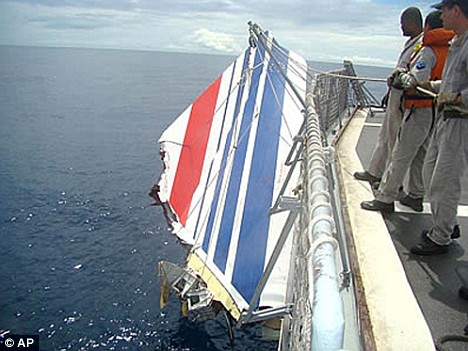
Southern Pulse has reported yesterday that the French authorities are investigating the possibility that two terrorists boarded Air France flight 477 in Rio with the premeditated intention of exploding the aircraft.

A week or so ago, the Brazilian intelligence agency leaked (not sure if it was intentional or not) that some analysts were considering the theory that the explosion was a terrorist attack.


News out of the UK exonerates the two men who the French thought were terrorists, but I want to consider for a moment the possibility that terrorists boarded a flight in Rio to explode an Air France jet.

I've lived in Brazil for a long time, most of that time spent in Rio. I can say from first hand experience that it would not be a challenge for anyone who wanted to board a plane in Rio with an explosive device.

The security is all but non-existent. But that's not the root of it. The bottom line is that the Brazilian government, and most Brazilians, think that terrorism is some one else's problem.


This is why, for example, that certain employees of the USG have complained in the past that the Brazilians were dragging their heels when it came to the 3+1 group (Brazil, Argentina, Paraguay - plus - the United States), which worked on issues such as money laundering and terrorist financing in the tri-border area.

When I speak with Brazilian Federal Police, politicians, and academics, and others, we always talk about organized crime, the drug trade, black markets, Brazil's borders (it shares a border with ten other countries), and areas of the country that are most vulnerable, namely the Amazon.

But when the topic of terrorism comes up, the usual response is the FARC - and rightly so. The FARC is the most proximate terrorist group that many Brazilian officials consider a threat.


The idea that Hezbollah or some other terrorist group may be forming cells in Brazilian cities, with the intention of hitting a soft target in Brazil, is not something that I think the Brazilians spend a lot of time talking about and thinking about.


Then again, the United States did not embrace a national dialogue about terrorism until September 11.


Terrorism is not a happy topic. When we dig into the realities that a terrorist presence may produce, the conclusions are frightful, and demanding. Homeland security in any county is a high-ticket item. And the Brazilian government simply does not have the resources.


The explosion of AF477 likely was not a terrorist act. The strongest evidence of that theory is that no one has stepped forward to claim responsibility - correct me if I'm wrong.


If it was a terrorist act, however, it would put Brazil on the map of terrorist targets, changing the reality of all who live and work in Brazil, and likely changing the posture of the Brazilian government vis-a-vis working with the USG to clamp down on terrorist activity in South America.


I am thankful the flight was most likely a freak accident, but I'm worried for Brazil.

For any terrorist group looking for a place to hit a soft target, Brazil is a low hanging fruit - one that becomes ever more juicy as Lula raises Brazil's profile on the global stage.

Friday, June 12, 2009

The troll under the bridge and terrorists in Mexico

I know I'm supposed to be off promoting my book, but I had to get in at least a couple more posts...

Lately I've seen a great deal of media flack about terrorists and Mexican smugglers. I've also spoken to many, many people on border violence, and this issue seems to continue to rise to the surface of the conversation.


Let me begin by stating a well known fact among Border Patrol, Intel analysts who focus on the border, and just about anyone who deals with trying to stop illicit products - people and goods - from crossing north.


"Smugglers are smugglers" one intel analyst and veteran field operative told me this morning.


This is perhaps the only reason why we should keep an eye on the theory that terrorists could leverage contacts with Mexican organized crime to enter the United States.


I call it a "troll under the bridge" arrangement. All border crossing zones into the United States are either tightly controlled or contested (such as Juarez these days). Those border crossings, or plazas, all have one man who oversees the south-north traffic into the United States. He is an economic actor motivated by power and wealth. He is the troll.


If anyone who is not part of his integrated network comes along and wants to cross the bridge into the United States, the troll will be paid. This exchange is sometimes called a tax or a fee in Mexico.


This is where the theory of terrorists crossing into the US through Mexico holds water. The troll will let anyone cross the bridge if they can pay the tax, with the exception of rivals within Mexico, of course.


To take this theory one step farther, and beyond where most US-based media stops the analysis, we will have to consider the existence of Hezbollah in Latin America.


Apart from the Iranian presence in the Americas, which is an overlapping issue - there is a de facto presence of Hezbollah operatives in the region, likely concentrated now somewhere in Venezuela. 


My guess would be in northwestern Venezuela, near the border with Colombia. Email me if you want details on why.


Other places are:


The TBA (tri-border area between Argentina, Paraguay, and Brazil), and possibly other tri-border areas in South America; 


Bolivia, Peru, and Chile; 


and, Nicaragua.


Beyond the presence of Hezbollah operatives in the Americas, however, is the very real existence of a culture of Islamic fundamentalism. I admit, I'm not an expert on this, but I have seen enough evidence of Islamic fundamentalist activity in South America, especially Venezuela, that leads me and others to consider that "home-grown" Venezuelans could become converts to a Hezbollah operative's way of thinking and viewing the world.


The possibility that a Venezuelan national, who looks Latino and speaks fluent Spanish, converts to a fundamentalist Islamic way of thinking is just that: a possibility.


This possibility, when combined with the reality that a smuggler is just a smuggler in Mexico, strengthens the theory that terrorists could cross into the United States from Mexico.


But I'm not an alarmist on this. In a recent conversation I was labeled "bullish" by a new friend in New York who is working on a piece on this issue.


But the truth is, there is very little evidence to suggest that Hezbollah operatives are crawling around in Mexico. And apart from a crossing tax, what do Mexican criminals get out of it? 


...Likely reduction in their market size. 


A piece in Newsmax, published on 5 June, pulls together conclusions from a secret intelligence mission. To me, this piece is more media flack than anything. 


But the truth is that Washington is paying attention to this issue, and our leaders there should because Mexico needs all the help it can get. Prevention is the best medicine, and I'm relieved to know that the DIA, NSA, and CIA are all aware of this issue and trying to stay on top of it.

Thursday, June 04, 2009

Mr. Terrorist, Do your homework

I caught this piece from the Washington Times this morning about an alleged terrorist proclaiming in a video that "soldiers" could use tunnels under the US-Mexico border to smuggle a bio-weapon into the United States.

His example is four pounds of anthrax.

Of course such claims can be alarming, but I'm doubtful.

I don't think any terrorist with four pounds of anthrax, or of any chemical agent, would be allowed to use the tunnels. And I say allowed because these tunnels are tightly controlled on the Mexican side.

Second, Mexican criminals are economic actors. What do they get out of a catastrophic terrorist attack in a city in the Southern half of the United States?

They get increased vigilance on the border - not good.

They lose thousands of potential customers and therefor money - not good.

They become labeled as terrorists - which they are within their own right, but not according to the USG - and are then the target of the most powerful anti-terrorist organizations in the world, all working for the USG. Again, not good.

So, this guy in the video may think he has a good idea, but I doubt he has done his homework.

Monday, June 01, 2009

Terrorist Communications Cell in Brazil?

I'm in DC now for a few meetings, and I'm talking quite a bit about Brazil. It seems there is a lack of information and understanding about Brazil's future here in the nation's capital.

When I speak to US federal agents - and other security analysts - about Brazil's past, especially regarding their interest in working with Brazil in the arena of terrorist financing and related security matters, the usual response is simple.

Brazil doesn't play ball because they don't think terrorism is a Brazilian problem.

There is one reason why this type of pre-programmed response has begun to change on the Brazilian side.

Brazil is becoming more important on the global stage. As the so-called "sleeping giant" begins to make waves beyond South America, Brasilia will be expected to assist Washington and other countries with relevant security-related efforts, and this stretches well beyond UNASUR and Ameripol into the realm of terrorist financing, organized criminal activity out of Eastern Europe, and, most recently, terrorist communication networks.

Recently the Brazilian Federal Police, working with the FBI, captured an alleged "important leader" of the Al Qaeda organization. According to some reports, this man had a "high degree" of operational responsibility in the sector of communications.

This man, now named Khaled Hussein Ali, comes from the Bekaa Valley region of Lebanon and had worked in the IT sector in Sao Paulo. He has lived in Brazil for some 20 years.

His location in Sao Paulo is significant because heretofore, the focus of terrorist activity in Brazil, was in the south, bundled around Ciudad del Este, the focal point of the region's most famous tri-border area.

Khaled was arrested due to his association with the Jihad Media Battalion, which is known as a "very radical" Islamic group. He was arrested for racism on the 26th of April, then released some time later by a Brazilian federal judge who saw no reason to keep the guy under lock and key. The Brazilian government has denied that Khaled is part of Al Qaeda (predictably), but it has revoked Khaled's Lebanese passport.

As far as I know, there have been wire taps on Khaled's phones, and the Brazilian media continues to follow this case pretty closely. As I learn more, I'll post it here.

Powered by Southern Pulse | www.southernpulse.com