This is a source for analysis, interviews, and commentary on security in Latin America. Herein you will find rumors, the results of off the record interviews, and information you'll not find in international or United States news media.

Showing posts with label South America. Show all posts

Friday, August 14, 2009

Southern Pulse Intel Brief, 13 August 2009

I have posted below the Southern Pulse Intel Brief, with permission from the Southern Pulse editors. This intel brief is normally published only for Southern Pulse members, and no longer available on Networked Intelligence, the organization's blog. I hope you find it interesting and informative.


INTEL

Russia and Cuba signed agreements in August 2009 to explore oil in the Gulf of Mexico. As part of this latest effort to deepen ties between the two old friends, Russia has also extended Cuba a US$150 million credit line for construction materials and farm machinery.


Out of
India, sugar refining group Shree Renuka Sugars has made public its interest in acquiring a stake in Brazilian sugar and ethanol producer Grupo Moema. Shree Reunka has up to US$100 million available for the acquisition. Moema is also reportedly interested in other sugar refining groups, including Cosan, São Martinho Guarani, Cargill and Bunge.

Finally, we have learned that in
Mexico, Army personnel detained Roberto Gaspar Caballero, a 21 year-old resident of Reynosa, Tamaulipas on 5 August 2009 as he attempted to smuggle 20 grenades into the U.S. in his Chevy Suburban via the Reynosa-Pharr port of entry.


ANALYSIS


Russia’s new relationship with Cuba began to take shape in June 2008 when Russian Deputy Prime Minister Igor Sechin made a state visit for formal talks. Sechin returned with a delegation of businessmen and diplomats on 18 September 2008. News of the development of a Russian-Cuban space center later surfaced, and in mid-March 2009, we learned that five Russian companies could begin oil exploration in several Gulf of Mexico blocks owned by Cuba. With this agreement in place, Russia has solidified its position in Cuba as an energy partner for many years to come.

Indian sugar producers have had a tough year. This explains, in part, why the international price of sugar hovers at record highs, and why Brazilian sugar producers have begun to shoulder global demand, raising their international profile. Brazilian sugar production is closely tied to ethanol as both are made from sugar cane. Grupo Moema is but one of many companies that can produce ethanol or sugar, but only a few have attracted international attention. Cosan, which has been negotiation with Shell oil over a minority stake, is another. In the short-term, Brazil’s sugar/ethanol producers will struggle to meet domestic and international demand. The price of sugar, however, will help offset losses over the depressed price of ethanol and limited export markets.

The news of a Reynosa man caught smuggling grenades into the United States reminded us of when an unidentified man threw a grenade into a bar in Pharr, Texas. From 2008 to 2009, there has been a considerable jump in the amount of seized grenades in Mexico, indicating that the use of explosives in armed confrontations will continue to be a normal occurrence. We are watching for improvised explosive devices, however, which would be a serious escalation. On 16 March 2009, Mexican soldiers seized 34 Tovex sausage explosives, 47 meters of explosive fuse, and around ten pounds of granulated explosive from a safe house just south of Sunland Park, New Mexico. Additionally, on 19 and 24 February 2009, 30 kilos and 121 kilos of explosives, were stolen in Mexico. These explosives have yet to turn up.

Wednesday, July 01, 2009

Brazil: A fiscal paradise?

This is just a quick post to share some interesting information on Brazil and money laundering.

The OECD is pressuring Brazil to sign on to its Global Forum on Transparency and Information Exchange regime, branded as a "Partnership Against Corruption."

For most of his presidency, Lula has spoken out against so-called "fiscal paradise" countries around the world, where financial controls and laws governing money movement are both relaxed enough to invite would-be money laundering organizations to take residence.

Brazil has done it's fair share of anti-money laundering efforts, but it appears that in the eyes of the OECD, Brazil is still just another money laundering hub in Latin America. I would imagine that Brazil has opted not to join the OECD's club simply because under Lula's leadership, the country still has some affinity for the non-aligned movement, which would preclude any membership in such "aligned" organizations.

And perhaps more to the point, Brazil doesn't like to join a group that will tell it what to do, unless, of course, Brazil is at the head of the table, such as UNASUR.

Wednesday, June 17, 2009

Brazil: the low hanging fruit


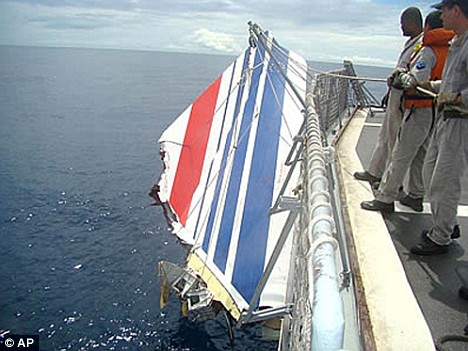
Southern Pulse has reported yesterday that the French authorities are investigating the possibility that two terrorists boarded Air France flight 477 in Rio with the premeditated intention of exploding the aircraft.

A week or so ago, the Brazilian intelligence agency leaked (not sure if it was intentional or not) that some analysts were considering the theory that the explosion was a terrorist attack.


News out of the UK exonerates the two men who the French thought were terrorists, but I want to consider for a moment the possibility that terrorists boarded a flight in Rio to explode an Air France jet.

I've lived in Brazil for a long time, most of that time spent in Rio. I can say from first hand experience that it would not be a challenge for anyone who wanted to board a plane in Rio with an explosive device.

The security is all but non-existent. But that's not the root of it. The bottom line is that the Brazilian government, and most Brazilians, think that terrorism is some one else's problem.


This is why, for example, that certain employees of the USG have complained in the past that the Brazilians were dragging their heels when it came to the 3+1 group (Brazil, Argentina, Paraguay - plus - the United States), which worked on issues such as money laundering and terrorist financing in the tri-border area.

When I speak with Brazilian Federal Police, politicians, and academics, and others, we always talk about organized crime, the drug trade, black markets, Brazil's borders (it shares a border with ten other countries), and areas of the country that are most vulnerable, namely the Amazon.

But when the topic of terrorism comes up, the usual response is the FARC - and rightly so. The FARC is the most proximate terrorist group that many Brazilian officials consider a threat.


The idea that Hezbollah or some other terrorist group may be forming cells in Brazilian cities, with the intention of hitting a soft target in Brazil, is not something that I think the Brazilians spend a lot of time talking about and thinking about.


Then again, the United States did not embrace a national dialogue about terrorism until September 11.


Terrorism is not a happy topic. When we dig into the realities that a terrorist presence may produce, the conclusions are frightful, and demanding. Homeland security in any county is a high-ticket item. And the Brazilian government simply does not have the resources.


The explosion of AF477 likely was not a terrorist act. The strongest evidence of that theory is that no one has stepped forward to claim responsibility - correct me if I'm wrong.


If it was a terrorist act, however, it would put Brazil on the map of terrorist targets, changing the reality of all who live and work in Brazil, and likely changing the posture of the Brazilian government vis-a-vis working with the USG to clamp down on terrorist activity in South America.


I am thankful the flight was most likely a freak accident, but I'm worried for Brazil.

For any terrorist group looking for a place to hit a soft target, Brazil is a low hanging fruit - one that becomes ever more juicy as Lula raises Brazil's profile on the global stage.

Wednesday, March 25, 2009

South Am Security Paradigm Continues Shifting


Not two days after I published a piece with the ISN on how we're seeing a paradigm shift on security in South America, Brazil follows up on the Obama/Lula meeting and takes the lead on suggesting that the MercoSur countries - Argentina, Brazil, Uruguay, and Paraguay - develop a sub-regional police force modeled after Interpol.

Here is the story in Portuguese (thanks Mr. H. for sending this along).

The premise of the piece is that Brazil will present at the next MercoSur meeting a proposal to create "Mercopol" - a security organization that brings together the federal police units of each member country.


A few reactions:


First, it seems that Brazil is testing the geopolitical waters. By floating this idea within a forum that it closely controls (albeit with some bickering from Argentina), Brazil can get a sense of how the region as a whole would cozy up to the idea of a South American police force formed under UNASUR, as Lula mentioned in his meeting with Obama.

Second, this proposal will give all countries involved in MercoSur, even the observers and the associate members - thinking Chile, Bolivia, Ecuador here - a chance to approve or disapprove, again within a forum that is not too heavy in terms of political liability on the regional level.

Third, if Mercopol were to be formed, I suspect there would be a heightened opposition to Venezuela's full entry into MercoSur (still held up in the Brazilian Congress much to Chavez's chagrin).


Finally, this is yet another example of Brazil taking a leadership role. The UNASUR Defense Council (Brazil's idea) has already stated that it will not place drug trafficking and organized crime on its agenda because these are not military problems. And this is absolutely correct. What we need, however, is a federal police complement to UNASUR's Defense Council.

Mercopol could easily morph into such an organization and perhaps feed into Ameripol, which to date has done little more than meet and talk.
Bottom line, Brazil is making moves to become South America's head cop. We will see if some of the region's top cop countries - Colombia and Chile specifically - fall in line behind Mercopol.
Powered by Southern Pulse | www.southernpulse.com