This is a source for analysis, interviews, and commentary on security in Latin America. Herein you will find rumors, the results of off the record interviews, and information you'll not find in international or United States news media.
 The Chief of Staff of the Japanese Maritime Self Defense Force recently met with Chinese Defense Minister Liang Guianglie in Ningbo, Zhejiang province, China to review China's East Fleet.
Many analysts agree that Naval control over the waters of East Asia will again become a contest (as it was during WWII) as China's Navy, known as the PLAN, continues its rapid development.
Japan, especially is worried, as is the United States.
But what I find more interesting is Brazil's role in China's naval development.
Below, my research assistant Kelsey Price, has prepared a backgrounder on Sino-Brazilian naval relations, including Brazil's offer to train the Chinese on the use of aircraft carriers - something the PLAN has yet to deploy.
--
As China attempts to solidify its place as an emerging world power, its leaders have placed more emphasis on building a stronger navy. At the forefront of this naval initiative is the construction of, and training for, China’s first aircraft carrier. Russia has sold China its former carrier Varyag (renamed the Shi Lang), and China has been slowly updating the craft since its docking at a Chinese shipyard in 2002. Analysts conclude that China’s navy, or PLAN, may use the ship for training and as a base for the construction of two of its own carriers.
Brazil is looking for international significance as well, so when PLAN turned to Brazil’s aircraft carrier-trained crew to train China’s navy, the Latin American power agreed to invite Chinese naval personnel aboard the Sao Paolo, Brazil’s only aircraft carrier. While the two BRIC nations—part of a group with Russia and India—both benefit from the military favor, China had very few choices. Brazil is one of only four nations to maintain an aircraft carrier capable of launching and recovering conventional aircraft, and the only one willing or able to train PLAN personnel. The United States has little interest in training the navy of a country it sees as a potential threat; EU law prohibits France from helping; and China’s relationship with Russia is hampered by an intellectual property dispute over Chinese fighter aircraft.
China clearly benefits from the naval training, but Brazil’s reward for helping China is less material than political. Brazil strengthens its reputation as a global force, especially when it assists a country as powerful as China. It also establishes stronger relations between the two countries, which formerly concentrated on economic ties and shared inclusion in the emerging BRIC nations.
Brazil and China’s other BRIC partners—India specifically—have expressed concern over PLAN’s technological advancement. India has declared China to be its “biggest threat.” China’s Major General Qian Lihua, director of the ministry’s Foreign Affairs office, assured, “Even if one day we have an aircraft carrier, unlike another country, we will not use it to pursue global deployment or global reach.” China’s President Hu Jintao also claimed that he did not seek regional hegemony or an arms race; rather, China would use its navy to pursue international cooperation in peacekeeping and anti-piracy enforcement.
The United States suspects other motives. A US Congressional Report for the People in May suggested that China may plan to use its improved navy to create conflict with Taiwan, and perhaps to prevent US intervention in the dispute. China may also use its threatening aircraft carrier to assert itself in the region, especially regarding its claims in territorial and freedom of navigation disputes. Its strengthened place as a world power may also convince other countries to align its policies with China, and displace US influence in the region. These concerns have prompted the US navy to pursue increased monitoring of China’s actions and to send more personnel to the Pacific.
Bates Gill, director of the Stockholm International Peace Research Institute, considers the very display of China’s navy a non-verbal threat to other countries. PLAN celebrated its 60th anniversary by including 52 navy vessels and aircraft in maneuvers off the eastern port of Qingdao in April. "Showing what you have can always also act as a deterrent - that's how it's seen in the US," said Mr Gill. "When the US navy takes an aircraft carrier to Hong Kong, it also tells the Chinese, have a look, you don't want to confront this."
Brazil and China’s rise in international influence—and displacement of US influence—is expedited by a visibly strong navy, and the partnership forming between the two nations suggests the emergence of a strong BRIC allegiance without the sway of the United States.
Notes:
“Beijing’s aircraft carrier will convert Asian oceans into Chinese lakes.” 28 May, 2009. Rupee News delivered by Newstex.
Farley, Robert. “The New China-Brazil axis.” 27 May 2009. The Progressive Realist.
“Brazil/China consolidate energy, trade and finance partnership.” 19 May, 2009. South Atlantic news agency MercoPress.
Ansari, Moin. “BRIC-battered: The growing Brazil china axis and fraying Indo-Russia deals.” 27 May, 2009. Rupee News.
“China has aircraft carrier hopes.” 17 November 2008. BBC.
Hille, Katherin. “China’s show of sea power challenges US.” 24 April 2009. The Financial Times.
“China Naval Modernization: Implications for U.S. Navy Capabilities -- Background and Issues for Congress.” 29 May 2009. Open CRS, Congressional Report for the People.
See “China’s show of sea power challenges US,” Financial Times.
An interesting piece from Jeremy Roebuck in The Monitor about the relationship between the Zetas and the Gulf Cartel.
This is information based on court documents.
And a few interesting paragraphs follow below:
"The extradition of alleged former Gulf Cartel chief Osiel Cárdenas Guillén from Mexico in 2006 set off a leadership crisis within the organization...
In Cárdenas' absence, three leaders have emerged to helm the drug trafficking organization, the June 9 indictment states. His brother - Antonio Ezequiel "Tony Tormenta" Cárdenas Guillén , 47 - took the reins after his sibling's arrest along with fellow cartel leader 37-year-old Jorge Eduardo "El Coss" Costilla Sánchez, federal investigators say. Zeta commander Heriberto "Lazca" Lazcano Lazcano, 34 - a founding member of the paramilitary group believed to be one of its most violent members - also took on a prominent role.
...[The] triumvirate comes together to decide matters ranging from payments owed to plaza bosses to the price The Company will charge for its drugs, U.S. federal authorities say."
As Mexican DTOs go, cooperation never a lasts. A showdown between the Gulf Cartel and the Zetas could very likely spark another round of violence - one that possibly would play out in a number of cities across the US where the Zetas and the Gulf Cartel work in tandem - Dallas, Houston, New Orleans, Atlanta, Charlotte, Baltimore to name only a few...
Finally, here's a map of where the Gulf Cartel operates in the US (a little dated), but it gives you an idea of where some of the violence in the US could happen if the Zetas and Gulf Cartel alliance ruptures.

This is just a quick post to share some interesting information on Brazil and money laundering.
The OECD is pressuring Brazil to sign on to its Global Forum on Transparency and Information Exchange regime, branded as a "Partnership Against Corruption."
For most of his presidency, Lula has spoken out against so-called "fiscal paradise" countries around the world, where financial controls and laws governing money movement are both relaxed enough to invite would-be money laundering organizations to take residence.
Brazil has done it's fair share of anti-money laundering efforts, but it appears that in the eyes of the OECD, Brazil is still just another money laundering hub in Latin America. I would imagine that Brazil has opted not to join the OECD's club simply because under Lula's leadership, the country still has some affinity for the non-aligned movement, which would preclude any membership in such "aligned" organizations.
And perhaps more to the point, Brazil doesn't like to join a group that will tell it what to do, unless, of course, Brazil is at the head of the table, such as UNASUR.
I've been on the road for work this week, so before the weekend I wanted to share here a few spots on the Internet where there has been a little early coverage of my book on the MS-13.
One of the few bloggers I read regularly, Zen Pundit, received an early copy of my book from my publisher. He was kind enough to devote some time for a post. Thanks!
Over at the Dallas Morning News' bookblog, reporter Diane Solis put up a brief review on my book and a related book by Tom Diaz. I've not read Tom's book, but I'll be sure to buy it. He operates a blog called Fairly Civil.
Our friends at Mexidata.info also posted a note on the book release.
And investigative reporter Jonathan Franklin, who recently published a piece - The Real Con Air - on deportation, interviewed me for this piece, and was nice enough to get the book's title in there. Thanks Jonathan!
Finally, my book is available for Kindle readers, and will be on stands July 7th.
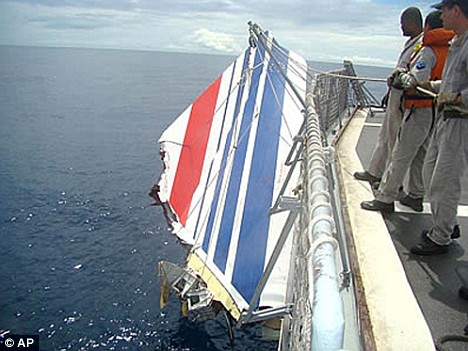
 Southern Pulse has reported yesterday that the French authorities are investigating the possibility that two terrorists boarded Air France flight 477 in Rio with the premeditated intention of exploding the aircraft.
A week or so ago, the Brazilian intelligence agency leaked (not sure if it was intentional or not) that some analysts were considering the theory that the explosion was a terrorist attack.
News out of the UK exonerates the two men who the French thought were terrorists, but I want to consider for a moment the possibility that terrorists boarded a flight in Rio to explode an Air France jet.
I've lived in Brazil for a long time, most of that time spent in Rio. I can say from first hand experience that it would not be a challenge for anyone who wanted to board a plane in Rio with an explosive device.
The security is all but non-existent. But that's not the root of it. The bottom line is that the Brazilian government, and most Brazilians, think that terrorism is some one else's problem.
This is why, for example, that certain employees of the USG have complained in the past that the Brazilians were dragging their heels when it came to the 3+1 group (Brazil, Argentina, Paraguay - plus - the United States), which worked on issues such as money laundering and terrorist financing in the tri-border area.
When I speak with Brazilian Federal Police, politicians, and academics, and others, we always talk about organized crime, the drug trade, black markets, Brazil's borders (it shares a border with ten other countries), and areas of the country that are most vulnerable, namely the Amazon.
But when the topic of terrorism comes up, the usual response is the FARC - and rightly so. The FARC is the most proximate terrorist group that many Brazilian officials consider a threat.
The idea that Hezbollah or some other terrorist group may be forming cells in Brazilian cities, with the intention of hitting a soft target in Brazil, is not something that I think the Brazilians spend a lot of time talking about and thinking about.
Then again, the United States did not embrace a national dialogue about terrorism until September 11.
Terrorism is not a happy topic. When we dig into the realities that a terrorist presence may produce, the conclusions are frightful, and demanding. Homeland security in any county is a high-ticket item. And the Brazilian government simply does not have the resources.
The explosion of AF477 likely was not a terrorist act. The strongest evidence of that theory is that no one has stepped forward to claim responsibility - correct me if I'm wrong.
If it was a terrorist act, however, it would put Brazil on the map of terrorist targets, changing the reality of all who live and work in Brazil, and likely changing the posture of the Brazilian government vis-a-vis working with the USG to clamp down on terrorist activity in South America.
I am thankful the flight was most likely a freak accident, but I'm worried for Brazil.
For any terrorist group looking for a place to hit a soft target, Brazil is a low hanging fruit - one that becomes ever more juicy as Lula raises Brazil's profile on the global stage.
Powered by Southern Pulse |
www.southernpulse.com The Chief of Staff of the Japanese Maritime Self Defense Force recently met with Chinese Defense Minister Liang Guianglie in Ningbo, Zhejiang province, China to review China's East Fleet.