This is a source for analysis, interviews, and commentary on security in Latin America. Herein you will find rumors, the results of off the record interviews, and information you'll not find in international or United States news media.
How many times has President Evo Morales criticized the US for spying on his administration? Most people who follow Bolivia know that Morales has often used public statements concerning the CIA and intelligence operations against his government to rouse local support. He even kicked out the Drug Enforcement Administration (although I suspect some agents remained in place), but his rhetoric is rarely, if ever, destined for an international audience.
So I can't help to find the following news a little ironic. The Bolivian government announced on Jan. 14 that it would create a state intelligence directorate modeled after the CIA. Bolivia's intelligence organization will fall under the control of the executive branch and focus on strategic questions. There will be some representation from Bolivia's armed forces and police.
And I suspect that the focus will be on organized crime and drug trafficking.
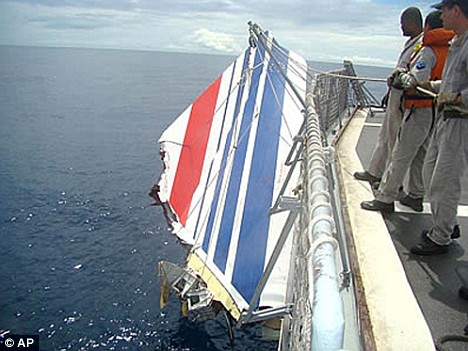
 Southern Pulse has reported yesterday that the French authorities are investigating the possibility that two terrorists boarded Air France flight 477 in Rio with the premeditated intention of exploding the aircraft.
A week or so ago, the Brazilian intelligence agency leaked (not sure if it was intentional or not) that some analysts were considering the theory that the explosion was a terrorist attack.
News out of the UK exonerates the two men who the French thought were terrorists, but I want to consider for a moment the possibility that terrorists boarded a flight in Rio to explode an Air France jet.
I've lived in Brazil for a long time, most of that time spent in Rio. I can say from first hand experience that it would not be a challenge for anyone who wanted to board a plane in Rio with an explosive device.
The security is all but non-existent. But that's not the root of it. The bottom line is that the Brazilian government, and most Brazilians, think that terrorism is some one else's problem.
This is why, for example, that certain employees of the USG have complained in the past that the Brazilians were dragging their heels when it came to the 3+1 group (Brazil, Argentina, Paraguay - plus - the United States), which worked on issues such as money laundering and terrorist financing in the tri-border area.
When I speak with Brazilian Federal Police, politicians, and academics, and others, we always talk about organized crime, the drug trade, black markets, Brazil's borders (it shares a border with ten other countries), and areas of the country that are most vulnerable, namely the Amazon.
But when the topic of terrorism comes up, the usual response is the FARC - and rightly so. The FARC is the most proximate terrorist group that many Brazilian officials consider a threat.
The idea that Hezbollah or some other terrorist group may be forming cells in Brazilian cities, with the intention of hitting a soft target in Brazil, is not something that I think the Brazilians spend a lot of time talking about and thinking about.
Then again, the United States did not embrace a national dialogue about terrorism until September 11.
Terrorism is not a happy topic. When we dig into the realities that a terrorist presence may produce, the conclusions are frightful, and demanding. Homeland security in any county is a high-ticket item. And the Brazilian government simply does not have the resources.
The explosion of AF477 likely was not a terrorist act. The strongest evidence of that theory is that no one has stepped forward to claim responsibility - correct me if I'm wrong.
If it was a terrorist act, however, it would put Brazil on the map of terrorist targets, changing the reality of all who live and work in Brazil, and likely changing the posture of the Brazilian government vis-a-vis working with the USG to clamp down on terrorist activity in South America.
I am thankful the flight was most likely a freak accident, but I'm worried for Brazil.
For any terrorist group looking for a place to hit a soft target, Brazil is a low hanging fruit - one that becomes ever more juicy as Lula raises Brazil's profile on the global stage.
Powered by Southern Pulse |
www.southernpulse.com